Helmets
Premium helmets that protect every young adventure.
Helmets from Xchange Sports are designed to keep children safe, comfortable and confident on every bike, scooter and ride-on adventure. Explore Australia’s premium range of kids bike helmets and scooter helmets, featuring lightweight designs, adjustable fits and trusted safety standards for toddlers through to teenagers. Shop leading brands to find the perfect helmet that delivers the protection parents trust and the comfort kids love.
✓ Flat Rate Shipping Australia-Wide • ✓ 30-Day Love Your Ride Guarantee • ✓ Australian Family-Owned Business • ✓ Secure Payments & Checkout

Trusted and Loved by Hundreds of Happy Parents and Grandparents!
- Rated 5.00 out of 5 based on 3 customer ratings(3)This product has multiple variants. The options may be chosen on the product page
$80.00Original price was: $80.00.$69.00Current price is: $69.00. - Rated 5.00 out of 5 based on 8 customer ratings(8)This product has multiple variants. The options may be chosen on the product page
$80.00Original price was: $80.00.$69.00Current price is: $69.00. - Rated 5.00 out of 5 based on 5 customer ratings(5)This product has multiple variants. The options may be chosen on the product page
$109.00Original price was: $109.00.$99.00Current price is: $99.00. - Rated 5.00 out of 5 based on 5 customer ratings(5)This product has multiple variants. The options may be chosen on the product page
$109.00Original price was: $109.00.$99.00Current price is: $99.00. - $89.95 – $119.95Price range: $89.95 through $119.95This product has multiple variants. The options may be chosen on the product page
- $89.95 – $128.95Price range: $89.95 through $128.95This product has multiple variants. The options may be chosen on the product page
- This product has multiple variants. The options may be chosen on the product page
$79.00Original price was: $79.00.$69.00Current price is: $69.00.
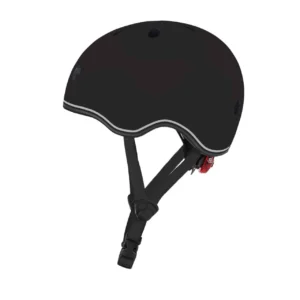
Showing all 7 resultsSorted by latest
Frequently Asked Questions of Helmets
To measure for the right size bicycle helmet, use a cloth measuring tape to determine the circumference of your head above your eyebrows and ears. Refer to the manufacturer's sizing guide and select the size that corresponds to your measurement for a snug and comfortable fit for optimal safety while cycling.
In Australia the standard that matters is AS/NZS 2063. Bicycle helmets sold here for road use must meet it, and it covers impact absorption, strap strength, helmet stability and field of vision. You may also see CPSC (United States), ASTM or EN 1078 (Europe) on the label — these are common on skate and multi-sport helmets, but on their own they do not make a helmet road-legal in Australia. Every helmet we range is supplied for the Australian market, so you can buy without checking the fine print.
Bicycle helmets should be replaced every 3-5 years or after a significant impact, even if there are no visible signs of damage. Replacing your helmet regularly is crucial to maintaining its structural integrity and effectiveness in protecting your head.
While bicycle helmets are specifically designed for cycling, some models may meet safety standards for other activities like skateboarding. However, it is crucial to check the helmet's specifications and suitability for specific activities to ensure adequate protection in different scenarios.
A bicycle helmet should fit snugly on your head without being too tight. It should sit level on your head, covering the top of your forehead without tilting backward. Ensure the straps are adjusted to keep the helmet securely in place, and make sure it does not move when you shake your head. A proper fitting helmet is essential for optimal protection in case of a fall or collision while cycling.
In Australia, helmet laws vary for different types of vehicles. While helmet laws typically apply to motorcycles and bicycles, it is important to check the specific regulations regarding scooter helmet requirements in your state or territory.
Full-face helmets offer more comprehensive protection for scooters as they cover the entire head, including the face and chin. They provide enhanced safety in case of accidents and can reduce the risk of facial injuries compared to open-face helmets.
Looking For Adventure and Insider Tips?
Here you’ll find tons of ideas and inspiration to make bike riding or skating with your child, even more fun!
Why Choose Our Quality Products For Your Child?
What Size Helmet Does My Child Need?
Age is a rough guide only — head size varies a lot between children of the same age. Always measure before you order.
How to measure your child’s head
- Run a soft tape measure around the widest part of the head, roughly 2cm above the eyebrows and above the ears.
- Keep the tape level all the way around and note the measurement in centimetres.
- Match that number to the size range below. If your child falls between two sizes, choose the larger one — every helmet we stock has an adjustable dial or strap system to fine-tune the fit.
| Child’s age | Head circumference | Typical size | Shop |
| 1–2 years | 44–48 cm | XXS | Toddler Helmet Ages 2-5yrs |
| 2–5 years | 46–52 cm | XS / S | Toddler Helmet Ages 2-5yrs |
| 5–8 years | 51–55 cm | S / M | Youth Helmet Ages 5-8yrs |
| 8–12 years | 54–58 cm | M / L | Teen Helmet Ages 9yrs to Adults |
| 12+ years | 56–60 cm | L / XL | Teen Helmet Ages 9yrs to Adults |
For step-by-step fitting photos and a strap-adjustment walkthrough, see our Kids Helmet Fit Guide.
The Ultimate Guide to Skate & Bicycle Helmets: Safety, Comfort, and Style
Skate and bicycle helmets are essential pieces of safety equipment for any child who rides. These helmets protect your child’s head from potential injuries during falls or collisions, making them a crucial investment for riders of all ages and skill levels. ‘
In this comprehensive guide, we’ll explore everything parents need to know about kids bike helmets, scooter helmets and skate helmets, from Australian safety standards to sizing a helmet for a toddler, and choosing the right helmet for your child.
Understanding Helmet Safety Standards
When it comes to skate and bicycle helmets, safety should be your top priority. Various organizations around the world have established safety standards to ensure that helmets provide adequate protection. Some of the most recognised standards include:
- AS/NZS 2063 in Australia and New Zealand — the standard that applies to you
- CPSC (Consumer Product Safety Commission) in the United States
- EN 1078 in Europe
These standards test helmets for impact resistance, strap strength, and stability. When shopping for a helmet, always look for certification labels that indicate compliance with these standards.
Bicycle Helmet Safety Standards in Australia
In Australia, bicycle helmets must meet the AS/NZS 2063 standard. This standard ensures that helmets sold in the country provide adequate protection for cyclists. Key aspects of the Australian standard include:
- Impact energy attenuation
- Retention system strength
- Stability
- Field of vision
Always check for the AS/NZS 2063 certification when purchasing a bicycle helmet in Australia to ensure it meets the required safety standards.
A helmet certified only to the American CPSC standard or the European EN 1078 standard is not compliant for road cycling in Australia, even if it looks identical. If you are buying from an overseas marketplace, check the sticker inside the shell before you order. Every bike helmet in our range is supplied for the Australian market, so you don’t have to check the fine print.
Choosing the Right Helmet for Your Activity
While skate and bicycle helmets may look similar, they are designed for different activities and offer varying levels of protection. Here’s a breakdown of the main differences:
Bicycle Helmets
Bicycle helmets are designed to protect against high-speed impacts and are typically more aerodynamic. They feature:
- Extended coverage at the back of the head
- Multiple vents for better airflow
- Lighter weight construction
Skate Helmets
Skate helmets are built to withstand multiple low-impact collisions and provide more coverage. They typically have:
- A rounder shape for better protection against falls from various angles
- Fewer vents
- A harder outer shell
When choosing between a skate helmet and a bike helmet, consider your primary activity and the level of protection you need.
Multi-Sport Helmets
Most kids don’t stick to one wheel. If your child rides a balance bike in the morning and a scooter after school, a dual-certified multi-sport helmet saves you buying two.
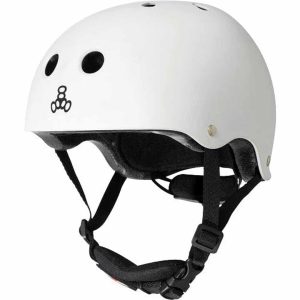
These helmets are tested to both bicycle and skate standards, which means they handle the single high-speed impact a bike helmet is built for and the repeated knocks of a skate park. Look for a “dual certified” label on the box. Our Triple 8 range is built exactly for this.
Key Features to Look for in a Kids Helmet
When shopping for skate and bicycle helmets, keep an eye out for these important features:
- MIPS Technology: Many modern helmets feature Multi-directional Impact Protection System (MIPS) technology, which helps reduce rotational forces during impacts. Learn more about MIPS technology
- Ventilation: Good airflow is crucial for comfort, especially during hot weather. Look for helmets with multiple vents to keep your head cool.
- Adjustable Fit Systems: Many helmets come with dial-fit systems or adjustable straps to ensure a snug and comfortable fit.
- Lightweight Materials: Helmets made from lightweight materials like polycarbonate or carbon fibre reduce neck strain — which matters far more for a small child than an adult, because a young rider’s neck muscles are still developing.
- Integrated Lights: Some helmets come with built-in LED lights for increased visibility during low-light conditions.
- Visors or Integrated Sunglasses: These features can help protect your eyes from sun glare and debris.
- Magnetic Buckles: Fiddly plastic clips catch skin under the chin and put kids off wearing a helmet. Magnetic closures can be done up one-handed and are far easier for a child to manage alone.
- Soft Interior Padding: Removable, washable pads keep the helmet fresh through a hot Australian summer and let you tune the fit as your child grows.
- Low-Pressure, Sensory-Friendly Fit: Some children are sensitive to tight straps, seams or the sound of a dial retention system. Look for a wider strap, a softer chin pad and a smooth interior with no exposed seams.
Proper Fit and Wearing Techniques
A helmet can only protect your child if it fits properly and is worn correctly. Follow these steps to check the fit:
- Measure your child’s head circumference to determine the right size.
- Position the helmet level on their head, about two finger-widths above the eyebrows.
- Adjust the side straps to form a “V” shape under and slightly in front of the ears.
- Tighten the chin strap so that no more than one or two fingers fit between the strap and their chin.
- Ask your child to shake their head gently. The helmet should stay in place without excessive movement.
How to Properly Wear a Bicycle Helmet
Wearing your bicycle helmet correctly is crucial for maximum protection. Here’s a step-by-step guide:
- Place the helmet on your child’s head, ensuring it’s level and covers their forehead.
- Adjust the side straps to form a “V” shape around the ears.
- Buckle the chin strap and tighten it until it’s snug but comfortable.
- Check the fit by pushing the helmet gently in all directions. It should move the skin, not slide on the head.
Remember, a properly fitted helmet is key to ensuring your safety while cycling.
Remember, a properly fitted helmet is what keeps your child safe, and a helmet that feels comfortable is a helmet they will actually wear.
The Kids Helmet Brands We Stock
We only range helmets we would put on our own children’s heads. Each brand below has been chosen for a specific reason.
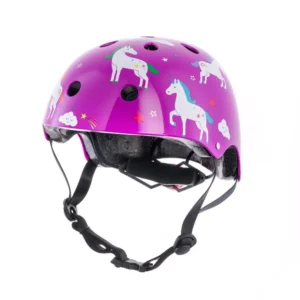
- Hornit — Best for visibility. Integrated LED safety lights front and rear make your child far easier to spot on winter school runs and dusk rides. Sizes span small through medium, with designs from unicorns to pug puppies.
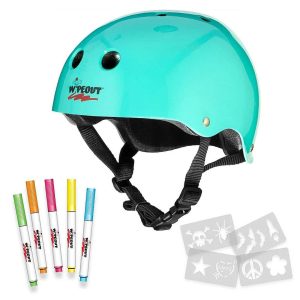
- Triple 8 — Best for kids who do everything. Dual-certified models cover bike, scooter and skate use, and the Dry Erase range lets kids draw on and redesign their own helmet, which does more for compliance than any amount of nagging.
- Globber — Best for first-time riders. Very light shells with LED lights and small XXS sizing, designed to pair with a toddler scooter or balance bike.
- Nutcase — Best for teens and adults. MIPS-equipped commuter styling for older riders who won’t wear anything that looks like a kids helmet.
Maintenance and Replacement
Proper maintenance can extend the life of your helmet, but it’s important to know when to replace it. Follow these guidelines:
- Clean your helmet regularly with mild soap and water
- Store your helmet in a cool, dry place away from direct sunlight
- Inspect your helmet for cracks, dents, or other damage before each use
- Replace your helmet after any significant impact, even if there’s no visible damage
- Replace your helmet every 3-5 years, as the protective materials can degrade over time
- Check the fit at the start of every season. Children’s heads grow quickly, and a helmet that sat correctly last summer may now sit too high on the forehead.
Most parents replace a kids helmet because it has been outgrown rather than because it has aged out. If the dial is at its widest setting, or the helmet leaves a mark on the forehead, it’s time for the next size up.
Why Buy a Skate & Bicycle Helmet From Xchange Sports Australia
Investing in a quality helmet is the single cheapest piece of insurance you will ever buy for your child. We are an Australian family-run business dispatching from Sydney, and we range helmets for kids specifically, not adult helmets in smaller shells.
- 30-Day Perfect Fit Guarantee — if the size isn’t right when it arrives, send it back and swap it.
- Flat-rate shipping Australia-wide, dispatched direct from Sydney.
- Sizing help before you buy — call or email and we’ll talk you through the measurement.
- Full range of matching protective gear, so knee and elbow pads arrive in the same box.