Kids Bike Locks
Lightweight Combination & Key Bike Locks Designed for Small Hands
The best bicycle lock for your child’s bike depends on three factors: where it is left, how long it stays there, and how much weight they carry. Our collection covers every age and risk level from lightweight cable locks for Australian school racks to heavy-duty options for overnight storage.
Every children’s bike lock here features a compact coiled cable design, available in keyed or combination mechanisms, sized for kids’ frames and light enough to carry daily.
✓ Flat Rate Shipping Australia-Wide • ✓ 30-Day Love Your Ride Guarantee • ✓ Australian Family-Owned Business • ✓ Secure Payments & Checkout

Trusted and Loved by Hundreds of Happy Parents and Grandparents!
Showing all 2 resultsSorted by latest
Frequently Asked Questions of Bike Locks
U-locks with hardened steel shackles are the hardest to cut quickly. A quality folding bike lock comes close — the interlocking steel plates resist bolt cutters and leverage attacks better than cable locks. For maximum security, use a Sold Secure-rated U-lock through the frame combined with a cable through the wheel.
Yes, a bicycle cable lock is adequate for supervised school bike racks during the day. For bikes valued over $300 or higher-risk areas, a folding bike lock or U-lock provides meaningfully better protection.
Try the most common factory defaults first, 0000 and 1234. If the code is genuinely forgotten, contact the manufacturer with proof of purchase; most reputable brands offer a reset service or replacement key. Mechanical defeat without proof of ownership requires a locksmith.
Yes. A 120cm coiled cable passes through the helmet strap, the bike frame and a rack post in a single loop, so your child carries one lock instead of two. Thread the strap rather than the buckle, since buckles unclip in seconds. Both locks in this collection are coiled cables, so either will do the job where the rack point is close enough to the bike.
They will. Thread the cable through the deck cut-out or around the folding stem and front wheel, then on to a fixed point. Families with a bike and a scooter in the shed generally buy one lock per child rather than one per ride, because the cable moves between them in seconds.
Coiled cable locks fit every frame size we stock, from 12-inch balance bikes through to 24-inch convertible bikes — there is no bracket or mounting point to match up. The only thing worth checking is the fixed point at the other end: 120cm reaches most school racks, while 150cm covers thicker gates and fence rails.
Looking For Adventure and Insider Tips?
Here you’ll find tons of ideas and inspiration to make bike riding or skating with your child, even more fun!
Why Choose Our Quality Products For Your Child?
How to Choose the Best Bike Lock for Your Child’s Bike
The best bike lock for a child is one they can carry, operate and use correctly every time. Start by matching the lock to where the bike will be left, how long it will be unattended and the value of the bike.
- Where: a busy school rack presents a different risk from an open station, quiet park or outdoor overnight area.
- How long: longer periods out of sight generally call for stronger security.
- Who will use it: your child should be able to position, close and reopen the lock without assistance.
No portable bicycle lock can guarantee that a bike will not be stolen. A good lock reduces opportunity, and correct locking makes the bike a less convenient target.
Kids Bike Lock Comparison
| Lock Type | Best Use and Trade-Off |
|---|---|
| Cable lock | Lightweight and flexible for lower-risk, visible stops. Easier for many children to carry, but less resistant to cutting than heavier lock types. |
| U-lock or D-lock | A stronger option for longer or higher-risk stops. The rigid shape can be less convenient on wide racks or small frames. |
| Folding lock | Compact storage with more positioning flexibility than a U-lock. Security and weight vary by model. |
| Chain lock | Flexible and available in higher-security designs, but often too heavy for younger children to carry comfortably. |
Kids bike locks with key vs combination — which suits your child?
A kids bike lock with key suits primary-age riders. There is nothing to memorise, nothing to forget over the school holidays, and a spare key can live in the school bag with a second one at home. Clip the key to an inside bag loop rather than a keyring in a pocket, pockets lose keys, zips don’t.
Combination locks suit riders from around ten who lock up unsupervised and share a rack with friends. There is no key to lose, and the code can be reset once it has been watched over a shoulder one too many times. Set a code that isn’t a birthday, and check your child can turn the dials with cold hands before the first winter ride.
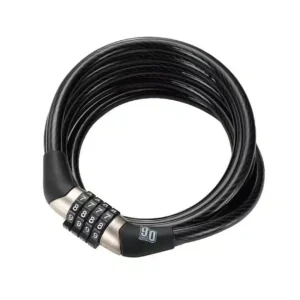
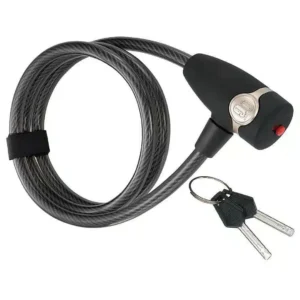
Both mechanisms sit in this collection: the OG Series Coiled Cable Bike Lock with Key – 120cm x 10mm for younger riders, and the OG Series – Coiled Cable Bike Lock Combo – 150cm x 8mm for older kids who want the extra reach.
Can you lock a bike helmet to your bike?
Yes. A coiled cable lock doubles as a bicycle helmet lock, thread the cable through a helmet vent or the chin strap, then through the bike frame and a fixed rack point before locking.
A 120cm cable is long enough to catch the helmet, the frame and the rack in a single pass; anything shorter usually forces you to choose between the helmet and the wheel. This is the standard method at Australian school racks, where helmet theft is opportunistic rather than planned.
Two habits make it work. Loop the strap itself rather than the buckle, because buckles unclip in seconds. And sit the helmet against the frame on the drive side so the cable can’t be slid up and off over the handlebars.
If your child rides daily, a keyed cable is quicker to manage than a combination when they’re wearing gloves. Fit and sizing for the helmet itself is covered in the kids helmet fit guide.
Choose a Bike Lock for the Location and Risk
Lower-Risk, Short and Visible Stops
A cable bike lock is light, flexible and simple to route through a smaller frame. It may suit a brief stop in a busy, visible area where the bike remains nearby. Cable locks are best treated as a deterrent, not high-security protection.
School Bike Racks
School-day parking can leave a bike unattended for hours. Check the school’s bike-storage rules, use the most secure approved rack and choose a lock your child can operate properly. For a valuable bike or a quiet, unsupervised rack, consider stronger independently rated security or ask an adult to help with a heavier lock.
Higher-Risk or Overnight Storage
Avoid leaving a bike outdoors overnight where possible. If longer unattended storage cannot be avoided, use a quality U-lock, folding lock or hardened chain that suits the bike and location. A second lock can secure a wheel and provide another barrier.
How to Lock a Kids Bike Correctly
- Choose a fixed bike rack. Make sure it is firmly secured and the bike cannot be lifted over or slipped off the end.
- Lock the frame. Pass the lock through the main frame triangle whenever the bicycle design allows.
- Include a wheel where possible. Secure the frame and rear wheel to the rack with the primary lock, or use a second lock for the other wheel.
- Remove loose space. Keep the lock snug and positioned away from the ground to make it harder to attack.
- Check before walking away. Pull the bike gently to confirm that the frame is attached to the rack and the lock is fully closed.
Cable, U-Lock, Folding or Chain: Which Is Best?
Cable Bike Locks
A coiled cable lock is easy to carry and can fit around many kids bike frames and racks. It is a practical choice when low weight and independent use matter most. Because cables can be cut more readily than quality hardened locks, use them for lower-risk situations or as a secondary lock.
U-Locks and Folding Bike Locks
These can offer greater resistance than a basic cable, depending on the construction and rating. Check that the lock opening fits around the child’s frame and the bike rack before buying. A frame mount can make a heavier lock easier for older children to transport.
Chain Bike Locks
Chains provide flexible locking positions and are available in strong designs. Their weight can make them better suited to home storage, adult assistance or older riders rather than a young child’s school bag.
Key Lock or Combination Bike Lock?
- Key bike lock: quick to open, with no code to remember. Keep the spare key at home and attach the everyday key securely to a bag or keyring.
- Combination bike lock: no key to carry. Choose an easy-to-read dial, teach your child to shield the code and store the combination securely with a parent or grandparent.
Let your child practise several times before the first school ride. The right mechanism is the one they can close, scramble and reopen confidently without leaving the lock partly engaged.
What Does a Sold Secure Rating Mean?
Sold Secure is an independent security-product testing organisation. Its current bicycle lock grades run from Bronze through Silver and Gold to Diamond, with Diamond representing the highest level in that scheme.
A rating can help you compare tested products, but it does not replace correct locking or sensible storage. Higher-value bikes and higher-risk locations generally justify a higher-rated lock. If the bike is insured, check whether the policy specifies an approved lock grade.
Read the official
Sold Secure bicycle lock rating guide
before relying on a particular grade. Only describe a lock as Sold Secure rated when that exact model appears in the approved-product database.
Teach a Simple Bike-Locking Routine
Practise at the actual school rack or a similar public rack before your child needs to do it alone. Ask them to repeat the same short routine: rack, frame, wheel, close and check.
- Store the lock on the bike, in a backpack or in the same place after every ride.
- Keep a spare key or recorded combination with a trusted adult.
- Choose a well-lit, visible rack near regular foot traffic where possible.
- Never lock only a removable wheel or leave the lock looped loosely around the bike.
Record Your Child’s Bike Details
Photograph the bike, record its serial number and keep the purchase receipt. Note any distinctive marks or accessories. These details can help identify the bicycle if it is lost or stolen.
If a recognised bike-registration service operates in your area, consider registering the bike and keeping the record current. Registration supports identification; it should be used alongside a suitable lock, not instead of one.
Shop Kids Bike Locks at Xchange Sports Australia
For a lightweight keyed option, the
OG Series Coiled Cable Bike Lock with Key
uses a 120cm x 10mm self-coiling cable for everyday, lower-risk locking.
If your child prefers a key-free option, the
OG Series Coiled Cable Bike Lock Combo
has a resettable combination and a 150cm x 8mm self-coiling cable.
Browse the full bike locks range and explore more bike and scooter accessories for family riding.
Check our shipping and delivery information before ordering for a birthday, school term or family cycling trip.