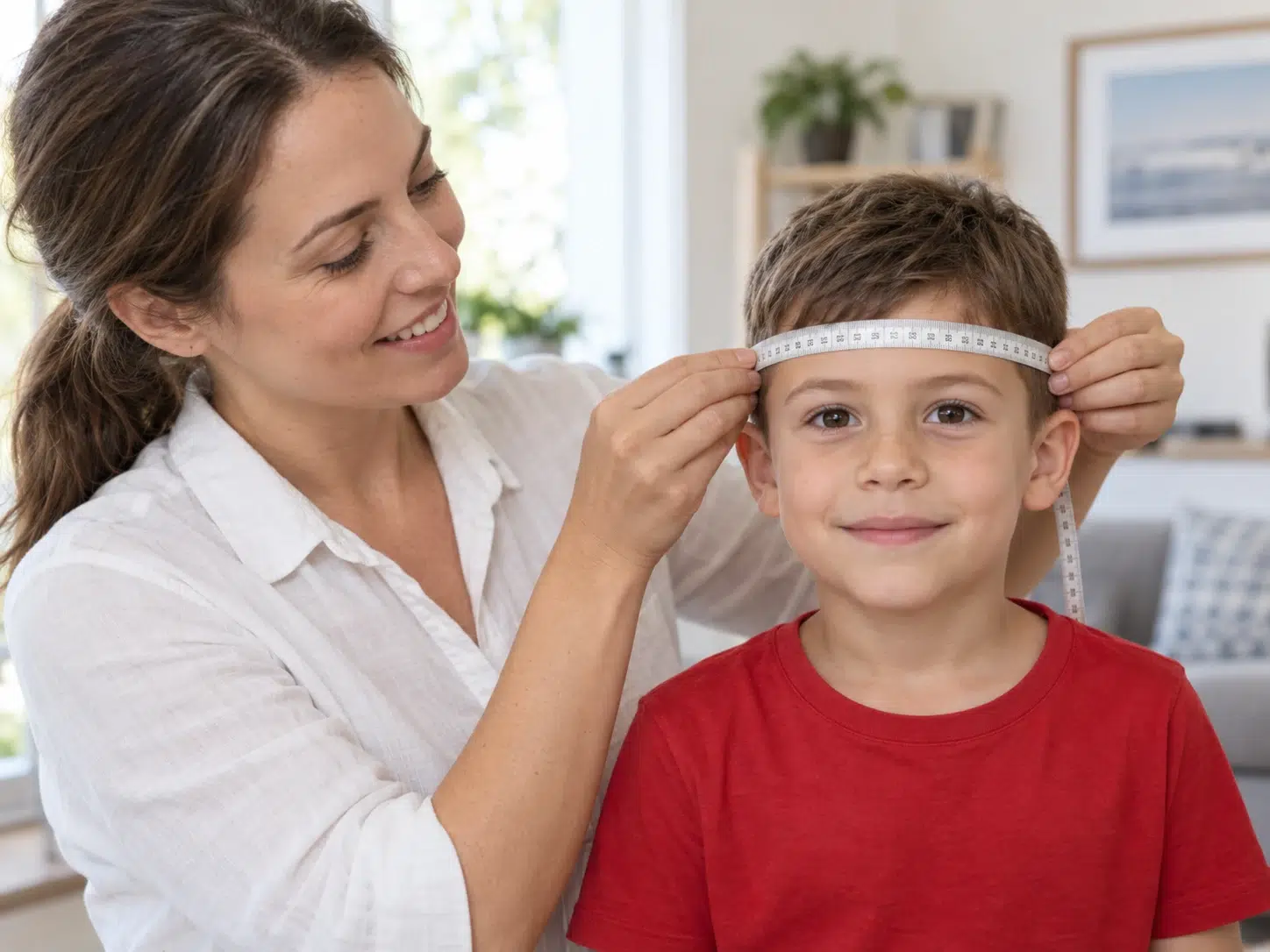
STEP 01Position the tape
Place a soft tape roughly 1–2 cm above their eyebrows. Keep hair clear of the tape.
Measure. Match. Check.
Find their size by head circumference, then check the fit. A few minutes now can make every ride feel more comfortable and secure.

Have their measurement?
Enter their head circumference to see every listed model and size that includes it.
How to measure
A soft measuring tape is ideal. You can also use non-stretch string, then lay it flat against a ruler.
STEP 01Place a soft tape roughly 1–2 cm above their eyebrows. Keep hair clear of the tape.
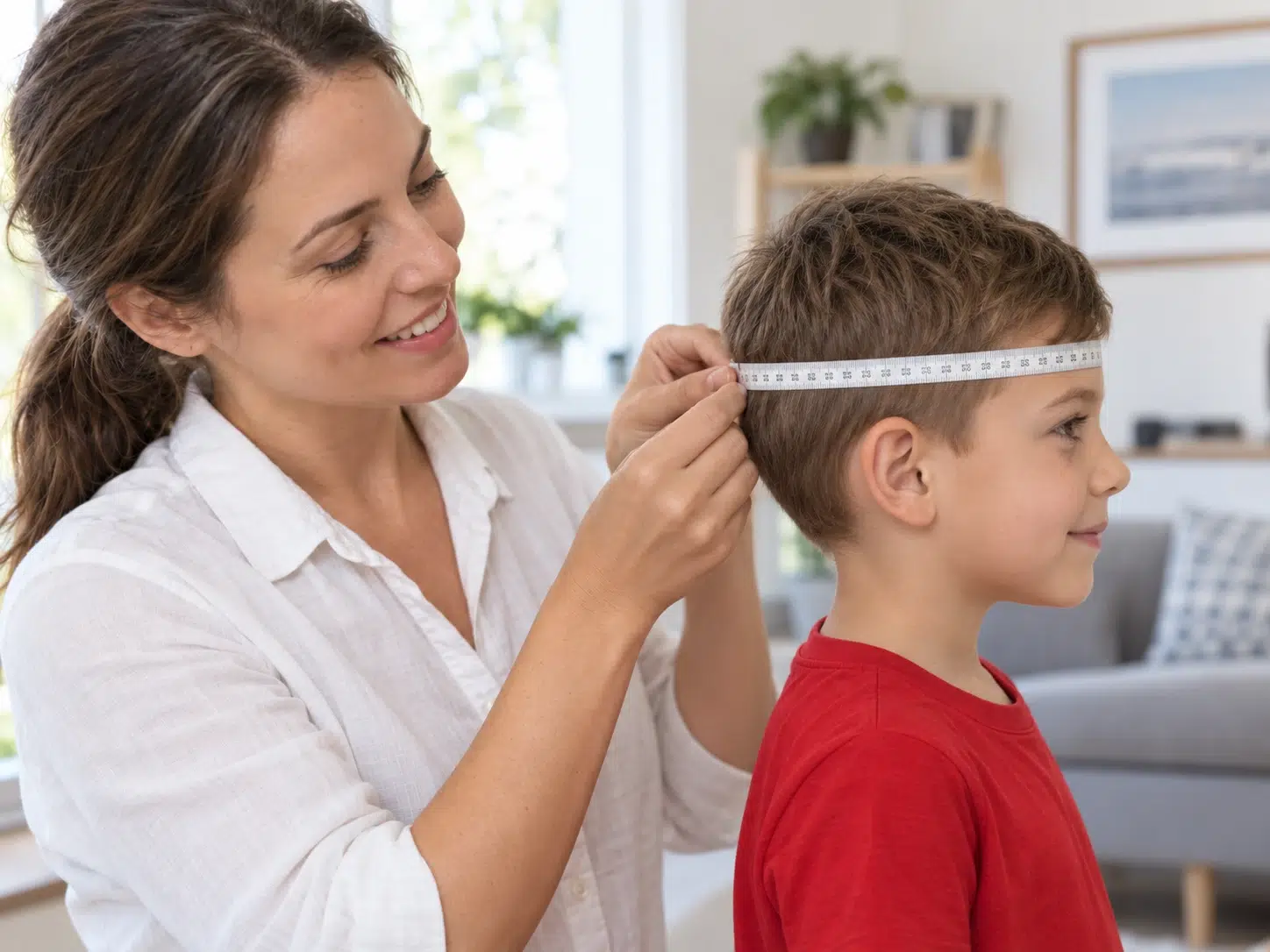
STEP 02Keep the tape approximately level around the fullest part at the back of the head. It should touch gently without digging in.
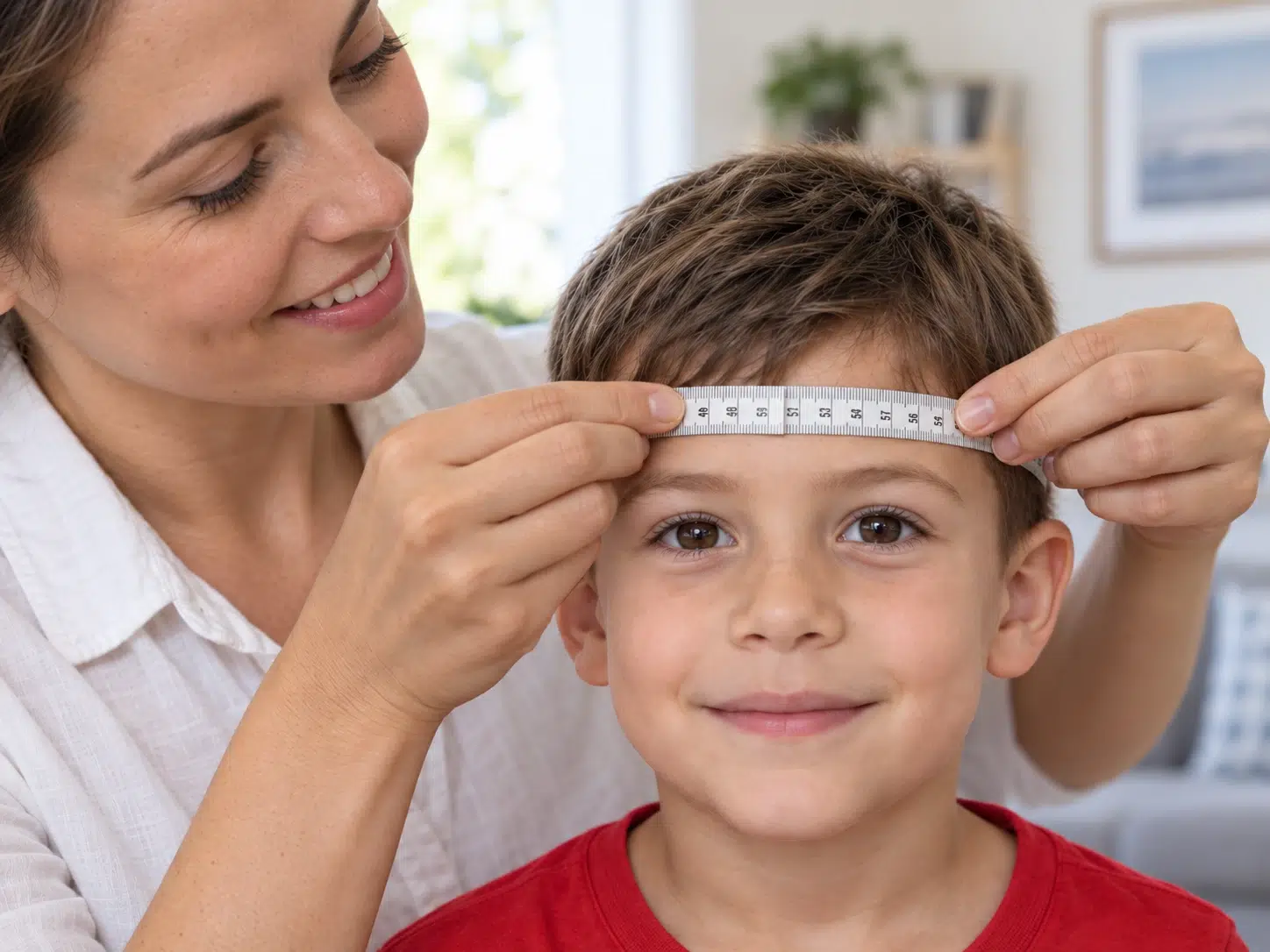
STEP 03Measure two or three times. Use the largest consistent reading in centimetres, including any decimal.
Send these instructions to their parent so you can shop with the right measurement.
Compare by centimetres
Size names vary between models. Use the range in this table—not an age label or a size name on its own.
| Helmet model | Size label | Head circumference |
|---|---|---|
| Triple 8 Lil 8 | XS / S | 46–52 cm |
| Triple 8 Wipeout | Small | 47–49 cm |
| Triple 8 Wipeout | Medium | 49–52 cm |
| Triple 8 Wipeout | Large | 52–56 cm |
| Hornit Kids Helmet | Small | 48–53 cm |
| Hornit Kids Helmet | Medium | 54–58 cm |
| Triple 8 Little Tricky | Youth / One size | 50–56 cm |
| Triple 8 Certified Sweatsaver · Signature | XS / S | 51–54 cm |
| Triple 8 Certified Sweatsaver · Signature | S / M | 53–57 cm |
| Triple 8 Certified Sweatsaver · Signature | L / XL | 57–60 cm |
On a phone, swipe the chart sideways if needed. Model names link to current product options.
Keep the decimal. A 53.5 cm head falls outside both listed Hornit ranges (48–53 cm and 54–58 cm). The finder shows other eligible models instead of rounding the number.
When the helmet arrives
Try it on indoors and follow the instructions supplied with that helmet.
The fitting video from our existing guide. Watch on YouTube.
Still loose after adjustment? Try another eligible size or helmet shape. Extra improvised padding is not a substitute for the right fit.
Fit them for today
Overlapping ranges are normal. A measurement narrows the options; trying the helmet on decides the fit.
Each should sit fully down, cover the forehead and feel comfortably snug. Check for pressure at the temples or gaps around the head.
Pick the size and shape that remain stable after correct adjustment. Do not buy extra growing room if it makes the helmet loose.
No size includes the number? Measure again. If the result is consistent, ask us for another option rather than selecting a size outside its published range.
Small adjustments matter
These examples show incorrect helmet fit. Use the correction below each image.
Forehead left exposed.
Fix: Bring the helmet forward so it sits level and low.
Front edge blocks their view.
Fix: Reposition it level above the eyebrows and readjust straps.
Shell shifts independently of the head.
Fix: Adjust as directed. If it still moves, try another size or shape.
Helmet can move out of position.
Fix: Buckle and tighten the strap so it is comfortably snug.
Choose from their matches
Start with an eligible size, then compare the features that matter for your child.
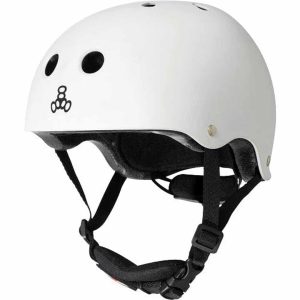
An adjustable option for smaller heads.
Rear fit dial and interchangeable fit pads.
View helmet →
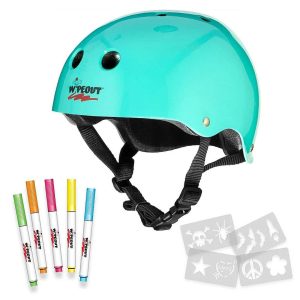
Three sizes and a dry-erase finish to personalise.
Choose by the individual Small, Medium or Large range.
View helmet →
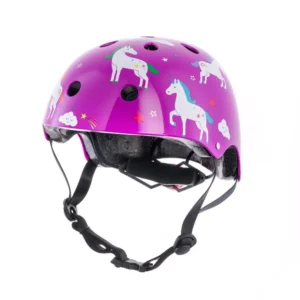
Colourful designs with an integrated rear LED.
Two size ranges; the LED supplements visibility.
View helmet →
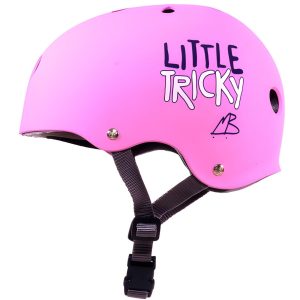
A youth option for heads within 50–56 cm.
Skate-inspired shape with a single Youth size.
View helmet →
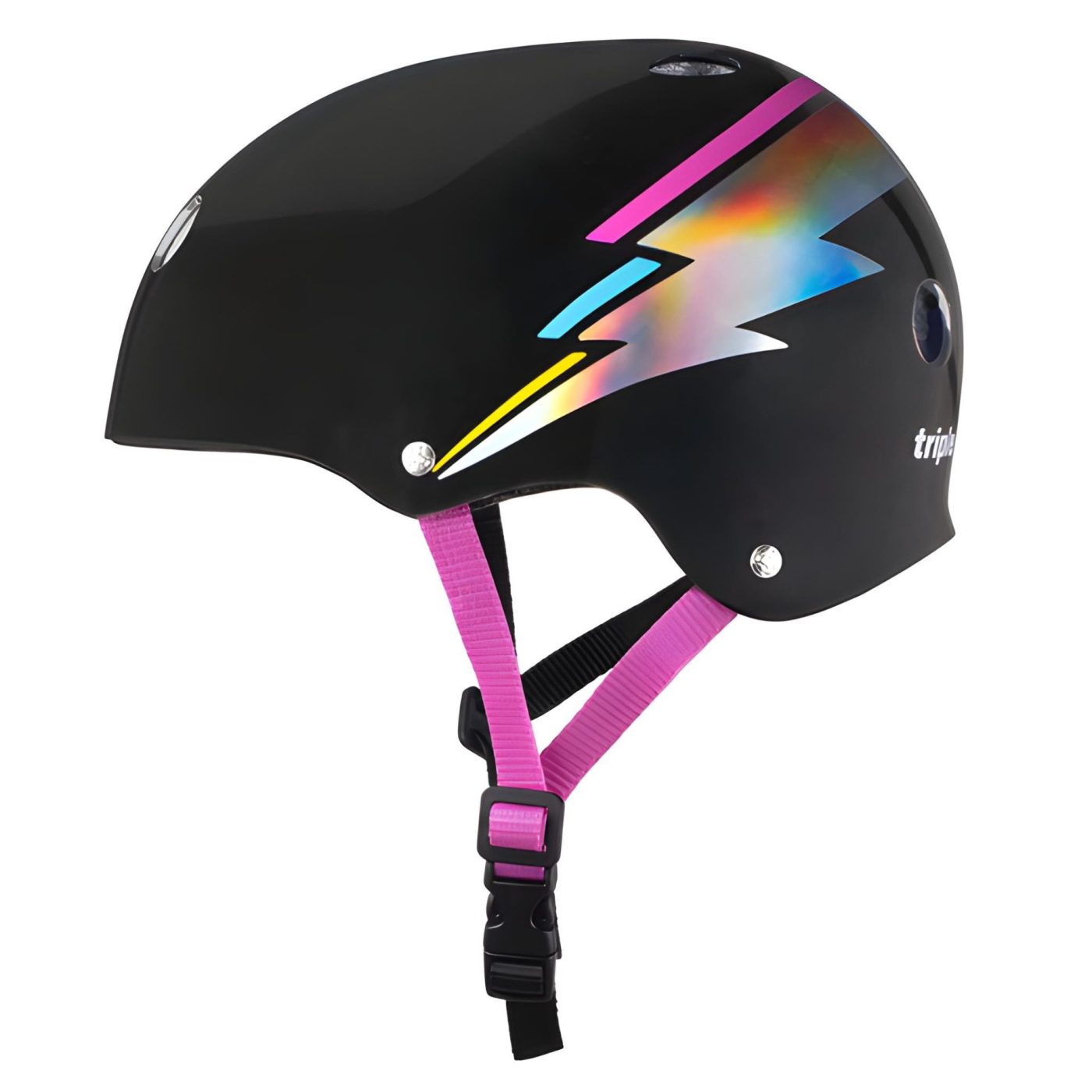
Plush comfort padding and signature designs.
Two liner sets help fine-tune comfort within the correct size.
View helmet →Check the exact model’s product information, certification label and manufacturer instructions for cycling, scootering or skating. A helmet’s appearance or “multi-sport” name alone does not establish its suitability.

Look after their protection
Replace a helmet that has been in a crash. Damage to its protective liner may be hidden. Follow the manufacturer’s replacement instructions.
Check the shell, liner, straps, buckle and fit system. Stop using it if damaged, and recheck the fit as your child grows.
Remove their riding helmet before climbing or playing on playground equipment. Store and clean it as the manufacturer directs.
Your questions, answered
Head sizes vary even among children of the same age. Use head circumference to identify eligible sizes, then check the model’s age and activity instructions and confirm the fit on their head.
Use non-stretch string around the widest part of the head, roughly 1–2 cm above the eyebrows. Mark the overlap, lay it straight against a ruler and record centimetres. Repeat to check consistency.
No. Enter the measured number as it is. For example, 53.5 cm should not be rounded to 54 cm to fit a range starting at 54 cm.
Compare both models on their head. The one that sits level, comfortably snug and stable after adjustment is the better fit. Head shape matters as well as circumference.
Use only the fitting pads approved for that helmet, as instructed by its manufacturer. If correct adjustment still leaves the shell loose or unstable, choose another size or shape.
No. The finder checks listed size ranges. Open the product page to see the current colours, sizes, price and availability.
Try it carefully indoors and contact our team for help. Check our returns policy for the conditions that apply before arranging an exchange or return.
A real person can help
Tell us their head circumference, the helmet you’re considering and what they’ll use it for. We’ll help you narrow the options.
0408 604 375 · Contact our team
Shipping & delivery · 30-day guarantee terms · Warranty & returns
First timer?
Subscribe to your newsletter and be the first to hear about our new arrivals, special promotions and online exlusives