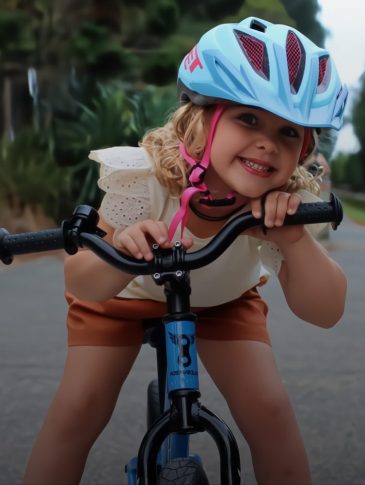
18 inch Balance Bike Ages (5-8yrs)
Lightweight 18-Inch Balance Bikes for Older Beginners.
Shop 18-inch balance bikes online in Australia for children aged 5 to 8 years, including taller riders and older kids learning to ride for the first time. These lightweight convertible balance bikes help children develop balance and steering confidence before transforming into a familiar first pedal bike when they are ready.
Compare your child’s height and inner-leg measurement with the seat height, bike weight and riding modes below to find the best 18-inch bike.
✓ $20 Flat-Rate Shipping Australia-Wide • ✓ 30-Day Love Your Ride Guarantee • ✓ Australian Family-Owned Business • ✓ Secure Payments & Checkout

Trusted and Loved by Hundreds of Happy Parents and Grandparents!
18 inch Balance Bike Ages (5-8yrs)
Rated 5.00 out of 5 based on 12 customer ratings(12)$489.00 – $509.00Price range: $489.00 through $509.00This product has multiple variants. The options may be chosen on the product page
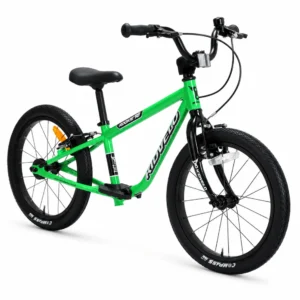
Showing the single result
Rookie 14 Vs Rookie 18: Which Does Your Child Fit Now?
The overlap between these two is settled by inseam and confidence, not by age. Your child needs to meet the larger bike's minimum fit before moving up.
| Fit and feature | 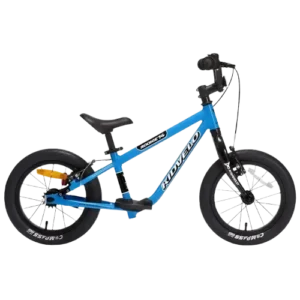 Rookie 14Ages 3–6 Rookie 14Ages 3–6 | 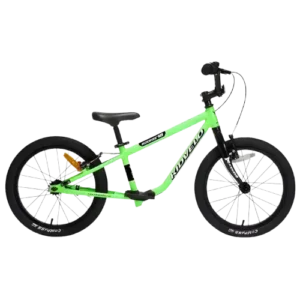 Rookie 18Ages 5–8 Rookie 18Ages 5–8 |
|---|---|---|
| Age guide | 3–6 years | 5–8 years |
| Inseam | 40–58 cm | 48–68 cm |
| Weight, balance mode | 5.2 kg | 6.0 kg |
| Weight, pedal mode | 6.6 kg | 7.6 kg |
| Brakes | Front and rear V-brakes; rear coaster in pedal mode | Front and rear V-brakes; rear coaster in pedal mode |
| Pedal conversion | Easy-Ride Pedal Kit included | Easy-Ride Pedal Kit included |
| Rider weight limit | 50 kg | 80 kg |
| Is there a size between? | No — the Kidvelo range steps from 14 to 18. If they're between, choose by inseam. | |
| Choose this when | Their inseam is under 48 cm | They meet 48 cm and can control the larger bike |
Never size up on principle. Check the size guide and buy the bike they fit today.
Frequently Asked Questions of 18 Inch Bike
An 18 inch bike suits children aged 5 to 8 years. Height and inseam are more reliable guides than age alone. Children standing 110–130 cm tall with an inseam of 45–57 cm fit an 18 inch bike correctly.
An 18 inch kids bike fits children standing approximately 110 cm to 130 cm tall. This corresponds broadly to ages 5 to 8 in Australian children, depending on individual growth rates.
The correct rider height range for an 18 inch bike is 110 cm to 130 cm. Confirm the fit using inseam: 45–57 cm is the right range for a comfortable seat height with room to grow.
Yes, for most 5 year olds standing over 110 cm. Measure the inseam first. If it falls below 45 cm, a 16 inch bike is a better fit. Do not size up and expect the child to grow into it. An oversized bike is harder to control and a genuine safety risk.
No. A 6 year old is a very common starting point at this wheel size, especially for children who have tried a pedal bike and lost confidence. The 18 inch frame fits riders 110–130cm with a seat that drops low enough for flat feet. Measure your child's inseam before ordering — if you are between sizes, call us and we will confirm the fit before you buy.
Yes. The 18 inch is our large balance bike and suits most 7 and 8 year olds up to 130cm tall. Riders above 130cm should look at the 24 inch balance bike, which adds two-speed auto gears. Both sizes convert to pedal bikes, so the bike grows with the rider rather than being outgrown.
Yes. The pedals and crank bolt onto the same frame using the tools supplied, and the changeover takes a few minutes at home. Your child keeps the bike they already know — same seat, same bars, same feel, which is why most ride away on pedals the same day. There is nothing extra to buy for the conversion.
Looking For Adventure and Insider Tips?
Here you’ll find tons of ideas and inspiration to make bike riding or skating with your child, even more fun!
Why Choose Our Quality Products For Your Child?

Is 5, 6 or 7 too old for a balance bike?
No. Balance is a skill, not an age. Plenty of children reach five, six or seven without ever learning to ride, usually because the bike they were given was too heavy, too tall, or went straight to pedals before they could balance. A balance bike for a 5 year old or a 6 year old is not a step backwards — it is the fastest route to riding independently.
The problem has never been the child. It has been the sizing. Nearly every balance bike sold in Australia tops out at 12 or 14 inch wheels, built for a two or three year old. Put a 120cm six year old on one and their knees hit the handlebars. They feel too big for it, so they stop riding it.
What changes at 18 inches:
- Seat height — drops low enough for flat feet, raises high enough to still fit at eight
- Frame length — a longer wheelbase so a taller child isn’t cramped over the bars
- Weight — light enough for a child to lift, right the bike after a fall, and carry up a kerb without help
- Wheel size — rolls over grass, gravel and driveway lips that stop a 12 inch wheel dead
By age:
- Balance bike for a 5 year old — the most common starting point at this size. Most 5 year olds over 110cm fit immediately with room to grow.
- Balance bike for a 6 year old — a strong fit. Six year olds who have never ridden usually go from first push to gliding within a few sessions.
- Balance bike for a 7 year old — fits comfortably at the upper end. Convert to pedals once they are gliding with both feet up.
- Balance bike for an 8 year old — the 18 inch suits most 8 year olds up to 130cm. Taller riders should size up to the 24 inch balance bike.
Boys and girls fit the same frame at this size — the geometry is identical, only the colourways differ.
How a convertible balance bike works
A convertible balance bike starts as a balance bike and becomes a pedal bike using the same frame. Your child learns balance first with both feet on the ground. When they can glide with their feet up — usually within weeks, not months — the pedals and crank bolt on. No training wheels, no second bike, no starting over.
The three stages:
- Balance mode — no pedals. Seat low, both feet flat. The child walks, then runs, then glides. This is where balance is actually learned.
- Transition — they can coast ten metres or more with feet lifted, and steer into a turn without putting a foot down. That is the signal.
- Pedal mode — pedals and crank fit to the frame in a few minutes with the supplied tools. Same bike, same seat height, same familiar feel. Most children ride away the same afternoon.
This matters more at five to eight than it does at two. An older child who has been handed a pedal bike and failed on it has usually lost confidence, not ability. Removing the pedals gives that back, and the conversion means you are not buying twice.
Browse the full convertible balance bikes range across all four wheel sizes.
Which balance bike size does my child need?
| Wheel size | Age guide | Child height | Best for |
| 12 inch | 2–4 years | 85–100cm | First bike for toddlers |
| 14 inch | 3–6 years | 95–115cm | Preschoolers, converts to pedals |
| 18 inch (this page) | 5–8 years | 110–130cm | Bigger kids learning late, or moving up |
| 24 inch | 9–13+ years | 130cm+ | Tall or older riders, geared |
Between two sizes? Measure the inseam using the method above and size to the leg, not the birthday. Still unsure, our kids bike size guide covers every range we stock, and the team will size your child over the phone before you order.
Why an 18 inch bike suits this age group
The step up from a 14 inch balance bike to 18 inch is meaningful. Children aged 5 to 8 are riding to school, chasing friends at the park, and starting to take on hills and kerbs. An 18 inch kids bike bridges the gap between the smaller starter sizes and the larger 20 inch bikes, giving children more speed and control without overwhelming a rider who is still growing.
Frame geometry shifts at this wheel size. Most 18 inch children’s bikes have a top tube height that requires a genuine inseam of at least 45 cm (18 inches). Standover clearance matters more now.
Children mount and dismount independently, often in motion. Check that your child has at least 2.5 cm (1 inch) of clearance between their crotch and the top tube when standing flat-footed over the bike.
Hand brakes are standard at 18 inches — and that is a good thing. Look for:
- Short-reach or junior levers — designed for small hands, not scaled-down adult levers
- Adjustable reach — lets the lever come closer to the handlebar for weaker grip strength
- Responsive cable tension — brake engagement before the lever bottoms out on the bar
Full-size adult levers demand more grip strength than most 5 to 8 year olds reliably have. Junior levers make a genuine safety difference.
18 Inch Bike Sizing — Getting the Fit Exactly Right
An 18 inch bike suits children standing between 110 cm and 130 cm tall. This maps broadly to ages 5 to 8, but height is a more accurate guide than age. A taller 4 year old may already fit. A shorter 9 year old may still ride one comfortably.
How to measure inseam for an 18 inch bike
Inseam is the most accurate way to size a kids bike — more reliable than age or height alone. Measure from the floor to your child’s crotch with shoes on. An inseam of 45–57 cm is the right range for an 18 inch kids bike.
Step-by-step:
- Have your child stand against a wall with shoes on and feet together
- Slide a hardcover book between their legs, spine facing upward, pressed firmly to the crotch
- Mark the wall at the top of the spine
- Measure from the floor to the mark — that is the inseam
If the inseam is under 45 cm, a 16 inch bike is a better fit. If it is above 57 cm, check the 20 inch range.
Kids bike size chart — where 18 inches fits
| Child Height | Inseam (approx.) | Recommended Wheel Size |
| Under 100 cm | Under 35 cm | 12–14 inch |
| 100–110 cm | 35–45 cm | 16 inch |
| 110–130 cm | 45–57 cm | 18 inch |
| 130–145 cm | 57–63 cm | 20 inch |
| Over 145 cm | Over 63 cm | 24 inch |
Source: International Bike Fund sizing guidelines and Australian bike retailer fit standards.
18 inch girls bike vs 18 inch boys bike — what actually differs
At this wheel size, the core frame geometry is nearly identical between an 18 inch girls bike and an 18 inch boys bike. The real differences are:
- Saddle width — some girls models use a marginally wider saddle
- Colour and graphics — the primary distinction between the two
- Handlebar styling — minor cosmetic differences only
Choose the bike that fits your child’s body and suits their preference. The frame geometry will not limit performance either way.
How heavy should an 18 inch kids bike be?
Bike weight is one of the most overlooked factors in this age group, and one of the most important. A heavy bike is harder to steer, harder to stop, and harder to pick up after a fall. That affects both safety and confidence.
The widely cited guideline, used by cycling educators and retailers including REI: a kids bike should weigh no more than 30–40% of the child’s body weight.
Children aged 5 to 8 typically weigh between 18 and 30 kg (using WHO/CDC growth chart median values). Applying the 30% guideline:
| Child Weight | Maximum Recommended Bike Weight |
| 18 kg (small 5 yr old) | 5.5 kg |
| 22 kg (average 6 yr old) | 6.6 kg |
| 26 kg (average 7 yr old) | 7.8 kg |
| 30 kg (larger 8 yr old) | 9.0 kg |
Most quality 18 inch kids bikes weigh between 6 and 9 kg. Budget models at mass-market retailers often reach 11–12 kg, noticeably harder for a young child to control.
What to check before buying:
- Look for the bike weight listed in the product specifications tab
- Aluminium frames are lighter than steel at the same wheel size
- Avoid any listing described only as “sturdy” or “durable” with no weight shown
Every bike in this collection has its weight listed in the product specifications, no guesswork, no “sturdy” in place of a number. The Kidvelo Rookie 18 Convertible Balance Bike sits inside the recommended range for a 5 to 8 year old in both balance and pedal configuration.
Training wheels on an 18 inch bike — what parents need to know
Why we don’t sell training wheels for this age group
Training wheels teach pedalling. They do not teach balance. When the wheels come off, the child starts learning balance from scratch, often at six or seven, when a fall feels much bigger than it did at three. Research published in the Journal of Motor Learning and Development found children who learn balance first reach independent cycling earlier than those who rely on training wheels.
A convertible balance bike removes the problem rather than delaying it. Balance comes first, pedals come second, and there is no wobbling transition in between. If your child is five or older and still relying on training wheels, taking them off and dropping the seat so they can paddle flat-footed will usually get them riding faster than any amount of gradual adjustment.
Should an 8 year old still use training wheels at 18 inches?
Most children on an 18 inch bike are aged 5 to 8. By this age, the majority are ready to ride without training wheels. Research published in the Journal of Motor Learning and Development found children who learn balance first, using a balance bike, reach independent cycling earlier than those who rely on training wheels.
Training wheels teach pedalling. They do not teach balance. When the wheels come off, the child has to learn balance from scratch. Most cycling educators now recommend skipping training wheels entirely and using a balance bike approach from the start.
That said, training wheels are a valid option for some children, particularly those who are newer to riding or who lack confidence. If your child still needs them at 18 inches, check the individual product listing. Some models include them. See our accessories range for compatible bolt-on sets.
When to remove training wheels
Remove training wheels when your child can:
- Balance briefly without the training wheels touching the ground
- Start and stop confidently using only hand brakes
- Corner without leaning heavily into either training wheel
Most children are ready to remove training wheels between ages 4 and 6. If your child is 6 or older and still relying on training wheels on an 18 inch bike, lowering the seat so they can paddle with both feet, the balance bike approach often accelerates the transition faster than gradual adjustment of the training wheels.
What terrain does an 18 inch kids bike handle?
Children at this age ride everywhere, the school path in the morning, the park on weekends, gravel driveways, and the occasional kerb. The tyre type determines how well the bike handles each surface.
Tyre types and where they work best:
- Semi-slick — a lightly patterned centre tread with mild shoulder knobs. The best all-round choice for Australian conditions. Fast on paths and stable on grass. Recommended for most kids in this age group.
- Full slick — smooth tread. Fast on sealed paths only. Loses traction on wet grass and gravel.
- Full knobby MTB — high rolling resistance on hard paths. Best for regular off-road riding. Harder for young legs to push on smooth surfaces.
For the majority of Australian 5 to 8 year olds, a semi-slick tyre handles every surface they actually ride without compromise.
Helmets, safety standards, and what Australian law requires
All bikes in this collection meet AS/NZS 1927:1998, the mandatory Australian bicycle safety standard regulated by the ACCC. This standard covers frame strength, braking performance, wheel retention, and assembly safety.
Helmet use is compulsory for cyclists of all ages in every Australian state and territory. From 22 September 2025, helmets must comply with the updated Consumer Goods (Bicycle Helmets) Safety Standard 2024, which accepts helmets certified to AS/NZS 2063:2020, AS/NZS 2063:2008, or the European EN 1078:2012+A1 standard. See the ACCC helmet standard page for the full approved list.
Helmet fit matters as much as certification. A helmet that sits back on the head or moves when the child shakes it will not protect them. Our youth helmets for 5–8 year olds are sized by head circumference, and the kids helmet fit guide shows you how to check the fit in under a minute.
Add kids protective gear for the first few weeks of riding, knee and elbow pads make a child far more willing to try again after a fall.