

A Safer, Smoother Ride Starts With Five Simple Checks
You do not need to be a bike mechanic to look after your child’s bike. A few quick checks before riding—and some simple cleaning between adventures—can help the bike steer, roll and stop as it should.
Before every ride, check the tyres, brakes, wheels, handlebars and seat. If anything is loose, cracked, bent or not working properly, pause the ride until the bike has been adjusted or inspected.
Kids bikes work hard. They are ridden over grass, footpaths and bumpy driveways, dropped at the park, transported in car boots and sometimes left outside after a sudden downpour. Regular maintenance helps catch small problems early, keeps the bike easier to control and can extend the life of its components.
This beginner-friendly guide explains how to maintain a kids bike without confusing workshop jargon. It covers balance bikes, pedal bikes and convertible balance-to-pedal bikes, with practical advice for Australian parents and grandparents.

A Simple Kids Bike Maintenance Schedule
You do not need to dismantle the bike every weekend. The most useful approach is to perform quick checks regularly and take a closer look after wet, sandy or muddy rides.
| When | What to check |
|---|---|
| Before every ride | Tyres, brakes, wheels, handlebars, seat and the child’s helmet. |
| Every few weeks | Chain, pedals, cranks, grips, cables, fasteners and overall cleanliness. |
| After rain, mud or sand | Clean and dry the bike. Inspect the chain, braking surfaces and moving parts. |
| After a fall | Check the steering, brake levers, wheels, frame, fork, pedals and seat alignment. |
| Every 6–12 months | Consider a professional inspection, especially for a frequently ridden bike or one being handed down. |
The right schedule depends on how often and where the bike is ridden. A bike used daily, near the beach or in wet conditions will usually need attention more often than one used occasionally on dry paths.
Why Kids Bikes Need Different Attention
For an adult, a slightly soft tyre or seat that has moved a little may feel like a minor inconvenience. For a child who is still developing balance, braking and steering skills, the same issue can make the bike feel heavy, unpredictable or difficult to control.
That is why kids bike maintenance is about more than protecting components. It is also about keeping the bike easy and reassuring to ride.
Confidence
A bike that rolls freely and responds predictably lets a young rider concentrate on learning—not fighting the bike.
Control
Correct tyre pressure, secure handlebars and reliable brakes help children steer and stop with less effort.
Fit
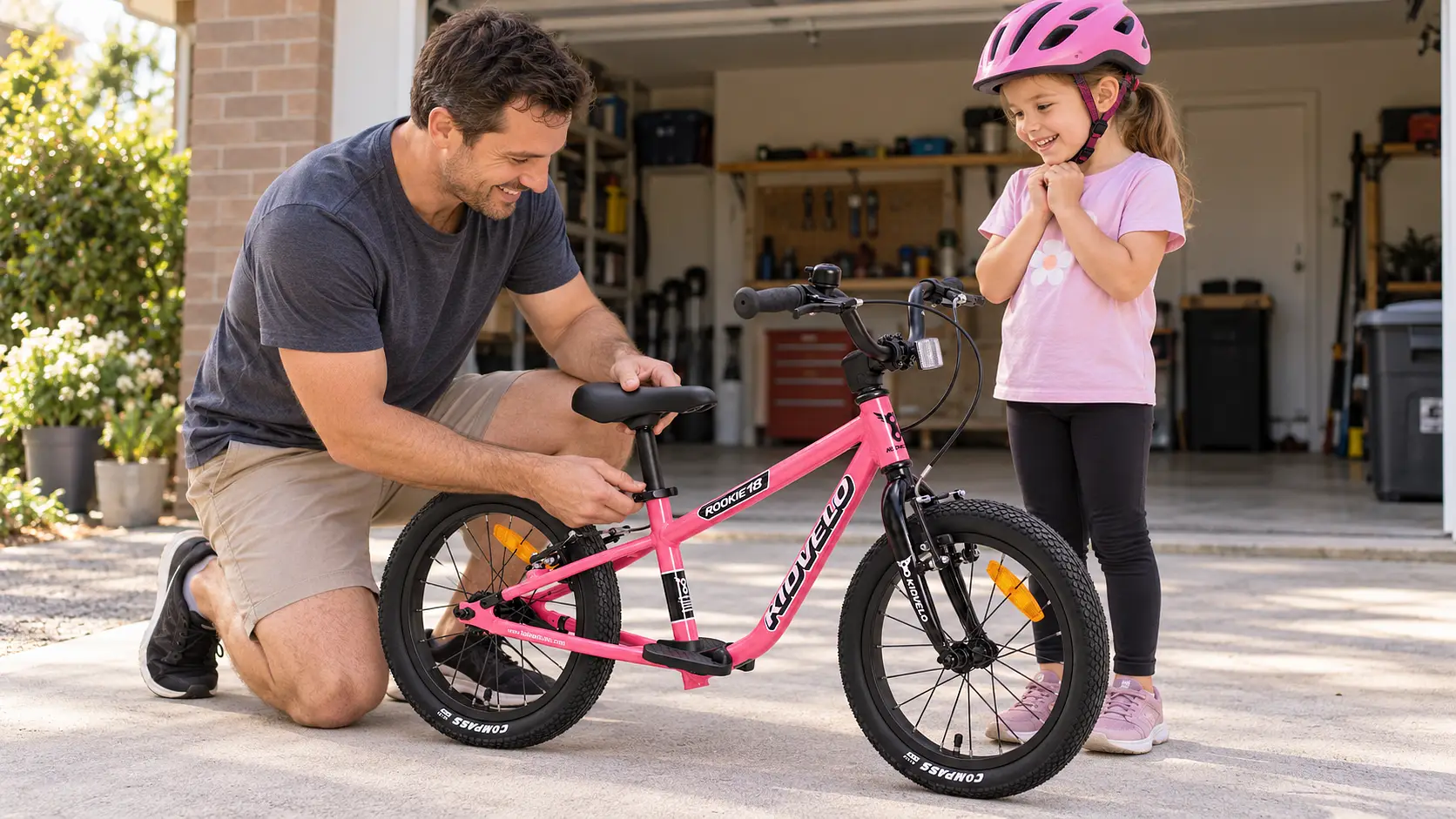
Children grow quickly. Regularly checking saddle height helps the bike continue to suit their size and riding stage.
If you are unsure whether the bike still fits, use our Kids Bike Size Guide. Inseam and riding ability provide a more useful starting point than age alone.
The Five-Minute Kids Bike Safety Check
Work through these five checks while the bike is stationary. Once they become familiar, the process should take only a few minutes.
Tyres
Pressure, tread and damage.
Brakes
Stopping power and lever feel.
Wheels
Security and straight rotation.
Steering
Handlebars, grips and movement.
Seat & Fit
Security, height and comfort.
1. Check the tyres and tyre pressure
Low tyre pressure can make a small bike noticeably harder to roll and steer. Check the recommended pressure range printed on the tyre sidewall and use a bike pump with a gauge where possible. The correct pressure can vary with the tyre, rider and riding surface, so the sidewall and bike manual should guide you.
- Look for cuts, cracks, bulges or exposed casing.
- Remove small stones or debris caught in the tread.
- Check for a tyre that repeatedly loses air.
- Make sure the tyre sits evenly around the wheel rim.
Squeezing a tyre can reveal that it is very soft, but it cannot confirm an accurate pressure. A gauge is the more reliable option.

2. Test the brakes
Stand beside the bike and test each brake separately. The wheel should stop firmly, and the brake should release when the lever is released. A hand-brake lever should not pull all the way back to the handlebar grip before the brake works.
- Check that the brake lever is secure and easy for the child’s hand to reach.
- Inspect visible cables for fraying, corrosion or damage.
- Check that brake pads contact the correct braking surface evenly.
- Listen for persistent rubbing after the brake is released.
If the bike has a coaster brake, rotate the cranks into a suitable position and test the back-pedal action carefully before the child rides. Some balance bikes have no brake, while others have a rear hand brake, so always check the equipment fitted to the individual bike.
3. Check the wheels
Make sure each wheel is properly secured using the bike manufacturer’s specified system. Lift one end of the bike at a time and gently spin the wheel. It should rotate freely without a pronounced side-to-side wobble, scraping or knocking sound.
If a wheel is loose, badly buckled or rubbing heavily, do not let the child ride until the cause has been corrected.
4. Check the handlebars and steering
Stand in front of the bike, hold the front wheel securely between your legs and gently try to turn the handlebars. The bars should not twist independently of the wheel. Check that the handlebar grips are secure and that the bar ends remain covered.
Turn the handlebars from side to side. Steering should feel smooth—not unusually stiff, notchy or excessively loose.
5. Check the seat and the child’s fit
Hold the saddle and try to turn or lower it using moderate hand pressure. It should remain securely in position. Confirm that the seatpost is not raised beyond its minimum-insertion mark and follow the manufacturer’s instructions when making an adjustment.
Fit requirements change as skills develop. A beginner on a balance bike generally needs reliable foot contact with the ground so they can push, stop and recover their balance. A confident pedal-bike rider may use a different saddle position for efficient pedalling. The correct setup depends on the child, the bike and the manufacturer’s guidance.
Bike maintenance and rider safety go together. Before riding, check that the helmet is undamaged, correctly positioned and securely adjusted for the child.
How to Clean a Kids Bike
A clean bike is easier to inspect. Removing dirt also helps prevent unnecessary wear and makes early signs of rust, damage or loose parts easier to notice.
What you will need
- A bucket of warm water
- Mild, bike-safe soap
- A soft sponge or cloth
- A small soft brush or old toothbrush
- Clean, dry cloths
- Low-pressure water
- Bike-specific chain lubricant for a pedal bike with a chain
Step-by-step cleaning process
- Remove loose dirt. Use a soft brush, damp cloth or gentle flow of water. Avoid directing water into hubs, bearings or other openings.
- Wash the frame and fork. Wipe painted surfaces with warm, mildly soapy water and a soft sponge.
- Clean the wheels and tyres. Brush dirt from the tread and wipe around the rims. Keep oily products away from all braking surfaces.
- Clean the drivetrain. On a chain-driven bike, use a separate cloth or brush to remove grime from the chain and accessible sprockets.
- Dry the bike thoroughly. Pay particular attention to the chain, bolts and areas where water can collect.
- Lubricate the chain sparingly. Apply a suitable bicycle chain lubricant according to its directions, allow it to work into the chain, then wipe away excess from the outside.
- Complete the safety check again. Confirm that the brakes, wheels, handlebars and saddle are working correctly before the next ride.
Never apply chain oil, grease or spray lubricant to brake pads, disc rotors or wheel-rim braking surfaces. Contamination can reduce braking performance. If this happens, stop using the bike and seek appropriate cleaning or replacement advice.

A pressure washer or strong hose jet can force water and dirt into bearings and remove necessary lubrication. Gentle cleaning is all most kids bikes need.
Balance Bike Maintenance
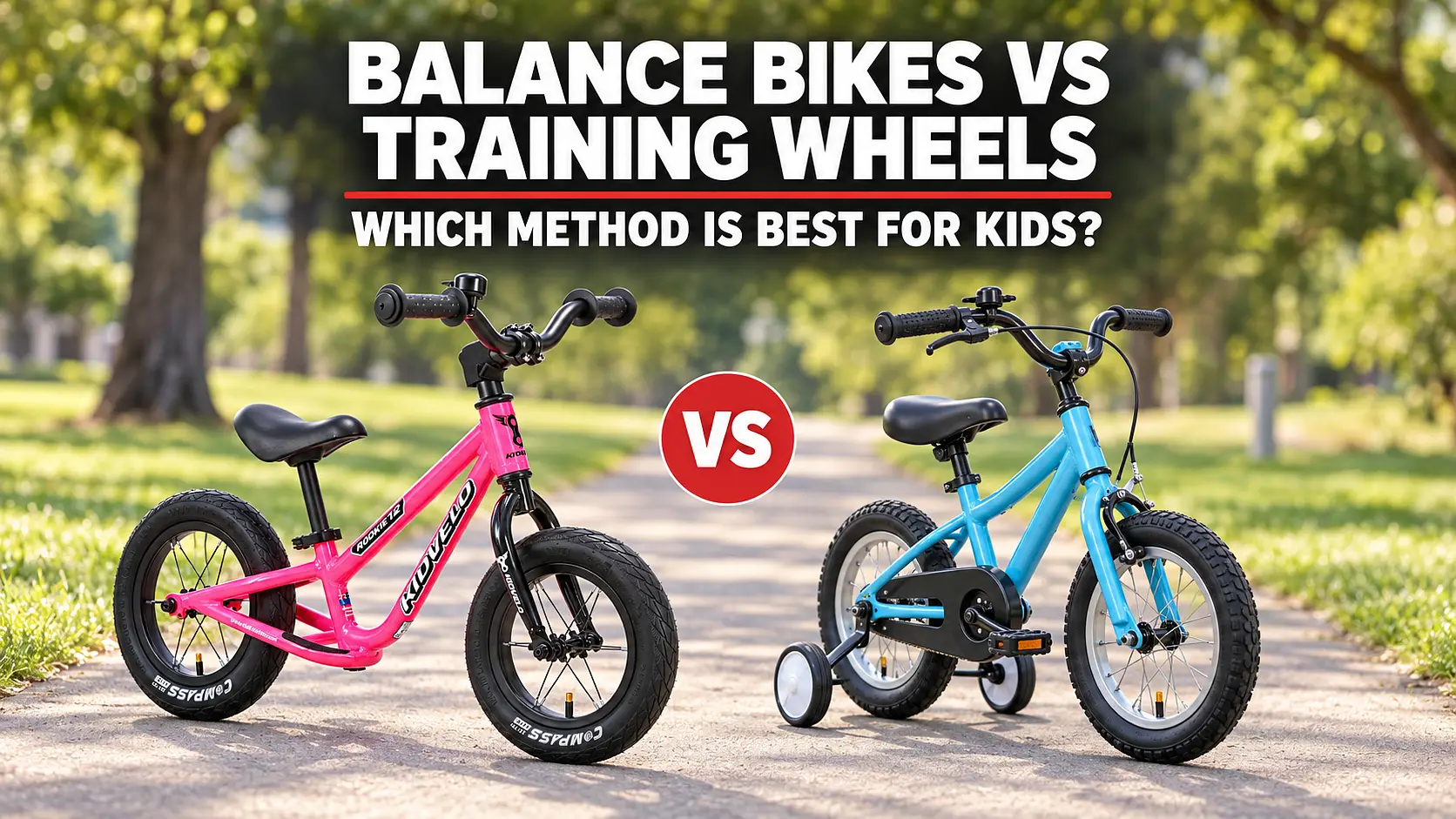
Balance bikes are generally simple to maintain because many do not have a chain, cranks or gears. They still need regular checks because the tyres, wheels, steering and saddle directly affect how confidently a child can glide and stop.
- Maintain the tyre pressure shown on the tyre sidewall.
- Check that both wheels are secure and rotate smoothly.
- Test the steering for smooth movement and unwanted play.
- Make sure both grips and handlebar-end protection are secure.
- Check that the saddle stays at the chosen height.
- Inspect the frame and fork after a fall or heavy impact.
- Test the hand brake if the balance bike has one.

For a child learning on a balance bike, a correctly adjusted saddle helps them place their feet on the ground, push effectively and regain stability. Recheck the setting regularly as they grow.
Kids Pedal Bike Maintenance
A pedal bike adds several moving parts to the basic balance-bike checklist. In addition to the tyres, wheels, steering and seat, inspect the chain, cranks, pedals, braking system and gears where fitted.
Check the chain
Look for rust, heavy dirt, stiff links, excessive slack or a chain that repeatedly comes off. A clean and correctly lubricated chain should move smoothly and quietly. Use a proper bicycle chain lubricant rather than thick grease, and wipe away the excess so it does not collect grit.
Check the cranks and pedals
Rotate the pedals and listen for grinding, clicking or scraping. Check for obvious looseness and damage. If a crank or pedal feels loose, stop riding until it has been correctly tightened or inspected.
Check the gears
If the bike has gears, test them in a safe, controlled area. Repeated skipping, delayed changes or a chain falling off can indicate that the drivetrain needs adjustment. Gear and hub systems differ, so follow the relevant product manual or ask a bike mechanic for help.
Checking a convertible balance-to-pedal bike
A convertible bike needs an additional inspection after the pedal system is installed. Confirm that the conversion components are fitted exactly as shown in the manufacturer’s instructions.
- Check the pedal-kit and frame connection points.
- Inspect chain alignment and tension.
- Confirm the cranks and pedals rotate freely.
- Test the braking system before the child rides.
- Recheck all conversion attachment points after the first few rides.
Kidvelo Rookie convertible bikes are designed to progress from balance mode to pedal mode. If you need help with assembly or a replacement component, contact the Xchange Sports team with the bike model and details of the part.
Seven Common Bike Maintenance Mistakes
- Guessing the tyre pressure. Check the sidewall and use a gauge rather than relying only on how the tyre feels.
- Using too much chain lubricant. Excess lubricant attracts dirt. Apply it sparingly and wipe the outside of the chain clean.
- Getting lubricant on braking surfaces. Keep oils and cleaning products away from brake pads, rotors and rim-brake tracks.
- Overtightening fasteners. More force is not always safer. Follow the manufacturer’s specified procedure and torque values where provided.
- Using a pressure washer. High-pressure water can enter bearings and remove lubrication.
- Ignoring new noises or movement. A rattle, wobble, scrape or sudden handling change deserves attention before the next ride.
- Forgetting that children grow. Reassess saddle height, brake-lever reach and overall bike fit regularly.
A Beginner’s Kids Bike Maintenance Toolkit
A small, sensible toolkit is enough for most routine home care. Always use tools that properly fit the bike’s fasteners and refer to the product manual before making adjustments.
Essential
- Bike pump with pressure gauge
- Correct valve attachment
- Metric Allen keys
- Soft brush and clean cloths
- Bike-specific chain lubricant
Useful Later
- Tyre levers
- Correct spare inner tube
- Puncture repair kit
- Compact bike multi-tool
Ask a Professional
- Frame or fork damage
- Wheel truing
- Bearing repairs
- Complex brake or gear faults
- Problems you cannot identify
A compact pump is useful at home and on family outings. See the Azur Mini Bike Pump or explore our range of kids bike accessories.
When Should Your Child Stop Riding?
Home maintenance should never involve guessing about a safety-critical problem. Stop the ride and arrange an appropriate inspection if you notice any of the following:
- The brakes do not stop the bike properly.
- A wheel is loose, badly buckled or rubbing heavily.
- The handlebars or saddle move despite being secured.
- The frame or fork appears cracked, bent or seriously damaged.
- A tyre has a bulge, deep split or exposed casing.
- The chain repeatedly comes off or jams.
- The steering feels unusually tight, notchy or loose.
- The bike has been involved in a significant impact and you are unsure about its condition.
A professional service can also be worthwhile before passing a used bike to another child, after long-term storage or whenever the bike’s history is unknown.
Bike Maintenance Tips for Australian Families
After rain or muddy rides
Remove mud, dry the bike thoroughly and inspect the chain, fasteners and braking surfaces. Reapply chain lubricant only when needed and keep it away from the brakes.
After riding near the beach
Sand and salty moisture can accelerate wear and corrosion. Brush away sand and gently clean exposed surfaces as soon as practical. Do not force water into hubs or bearings.
During hot weather
Store the bike out of prolonged direct sun where possible. Heat and UV exposure can affect tyres, grips, saddles and finishes. Check the tyres before riding rather than assuming yesterday’s pressure is still correct.
During long-term storage
Clean and dry the bike first, then store it undercover in a ventilated area. Avoid leaving it beside pool chemicals, fertilisers or other corrosive substances. Before the bike returns to use, complete the full safety check.

Make Bike Care a Family Routine
Children do not need to perform mechanical adjustments, but they can learn to notice when something does not look or feel right. Turning the pre-ride check into a short routine helps them understand that looking after equipment is part of riding.
Look
Ask them to help spot a soft tyre, damaged grip or stones caught in the tread.
Listen
Encourage them to mention a new scrape, click, rattle or squeak.
Tell an Adult
Teach them to stop and ask for help if the bike suddenly feels different.
An adult should remain responsible for deciding whether the bike is safe to ride and for making or arranging repairs.
Kids Bike Maintenance FAQs
How often should I check my child’s bike?
Complete a quick tyre, brake, wheel, handlebar and saddle check before every ride. Carry out a closer inspection every few weeks and after a fall, wet ride or transport where the bike may have been knocked.
How often should a kids bike be professionally serviced?
There is no single interval for every bike. A frequently ridden bike may benefit from an inspection every 6–12 months, while an occasionally used bike may need less frequent servicing. Arrange help sooner if braking, steering, wheels, gears or the frame show signs of a problem.
What tyre pressure should a kids bike use?
Use the recommended pressure range printed on the tyre sidewall and check the bike manual for model-specific advice. Do not assume that every children’s bike uses the same pressure.
Can I use WD-40 on a bike chain?
Use a lubricant specifically intended for bicycle chains for ongoing lubrication. General-purpose water-displacing sprays are not a substitute for the correct chain lubricant. Whichever product you use, keep it completely away from braking surfaces.
How often should I lubricate a kids bike chain?
Lubricate when the chain has been cleaned and dried, sounds dry or shows signs that it needs attention. Riding frequency and conditions matter more than a fixed calendar. Use only a small amount and wipe away the excess.
How do I know when a kids bike tyre needs replacing?
Replacement may be needed if the tyre has deep cracks, cuts, bulges, exposed casing, severe tread wear or repeated punctures caused by deterioration. Stop riding if you are uncertain about visible tyre damage.
Are balance bikes easier to maintain?
They are often simpler because many have no chain, gears or cranks. However, the tyres, wheels, steering, grips, saddle, frame and any fitted brake still require regular inspection.
What should I check after my child falls off the bike?
Check the child first. Before the bike is ridden again, inspect the handlebars, brake levers, grips, wheels, tyres, saddle, pedals, frame and fork. If the impact was significant or anything appears bent, cracked or misaligned, arrange a professional inspection.
This guide provides general maintenance information and does not replace the instructions supplied with the bike or advice from a qualified bicycle mechanic. Component designs differ. Always follow the relevant manufacturer’s manual, safety warnings and specified fastener settings.
Need Help With Your Child’s Bike?
Not sure whether a part needs adjusting or replacing? Xchange Sports can help with practical advice about kids bikes, balance bikes, compatible accessories and replacement parts.