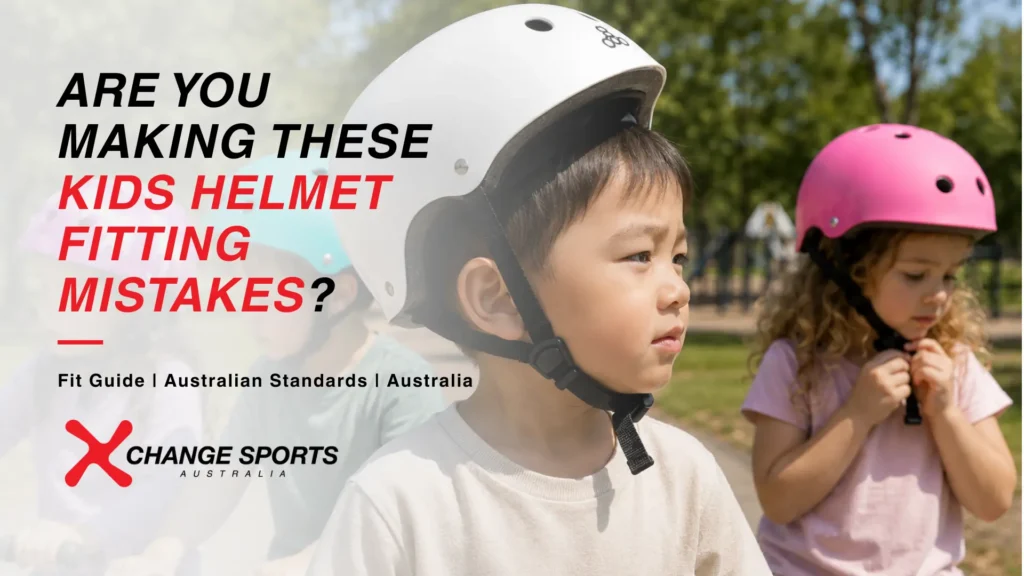
Helmet Fitting Mistakes: When your child jumps on a balance bike, scooter, or kids bike, a helmet becomes the most important piece of safety equipment they wear. But here’s the surprising truth: even the best helmet cannot properly protect your child if it doesn’t fit correctly.
Many parents unknowingly make simple helmet fitting mistakes that reduce protection during a fall or crash. A helmet that sits too high, moves around, or has loose straps may not stay in place when it matters most. According to children’s safety experts, a properly fitted helmet significantly reduces the risk of serious head injuries.
The good news? Correct helmet fitting is easier than most parents think.
In this guide, the team at Xchange Sports explains the most common helmet fitting mistakes parents make, and exactly how to fix them, so your child can ride safely and confidently.
Why Proper Helmet Fit Matters
A helmet is designed to absorb impact and protect your child’s head during a fall. However, safety experts consistently explain that the helmet must sit correctly on the head and stay securely in place to work properly.
A poorly fitted helmet can:
- Slide backwards during a crash
- Expose the forehead
- Shift sideways
- Fall off completely
- Cause discomfort that makes kids refuse to wear it
Children riding balance bikes, pedal bikes, scooters, and skateboards all need properly fitted helmets every single ride — even for short trips in the driveway.
8 Helmet Fitting Mistakes that Parents Make
Mistake #1: Buying A Helmet “To Grow Into”
This is one of the most common mistakes parents make.
It can feel practical to buy a larger helmet so your child can “grow into it,” but oversized helmets move around too much and cannot properly protect the head during impact. Experts strongly recommend buying a helmet that fits your child now — not later.
How To Measure Your Child’s Head Correctly
Use a soft tape measure and wrap it around the widest part of your child’s head:
- About 1–2cm above the eyebrows
- Just above the ears
- Around the back of the head
Most kids helmets are sized in centimetres.
General Kids Helmet Size Guide
- Toddler: 45–50cm
- Small Child: 48–52cm
- Youth: 52–57cm
Always check the manufacturer sizing guide because helmet shapes vary between brands.
Mistake #2: Wearing The Helmet Too Far Back
One of the biggest helmet mistakes parents make is allowing the helmet to tilt backwards.
When this happens, the child’s forehead is exposed — leaving one of the most vulnerable areas unprotected during a forward fall. Pediatric safety experts say the helmet should sit level on the head and low on the forehead.
The “Two Finger Rule”
A properly positioned helmet should sit:
- Flat and level
- About two finger widths above the eyebrows
If you can see a large amount of forehead, the helmet is too far back.
Correct Helmet Position
- Covers the forehead
- Sits level front to back
- Does not wobble
Incorrect Helmet Position
- Tilted backwards
- Forehead exposed
- Loose and unstable

Mistake #3: Loose Chin Straps
A helmet can look secure but still fail if the chin strap is too loose.
Safety organisations recommend that the strap should be snug enough that only one or two fingers fit between the strap and the child’s chin.
The Open Mouth Test
An easy way to test helmet security:
- Buckle the chin strap
- Ask your child to open their mouth wide
If the helmet pulls down slightly on the top of the head, the fit is usually correct.
If the helmet barely moves, the strap is probably too loose.
Mistake #4: Incorrect Side Strap Positioning
Many parents focus on the chin strap but forget about the side straps.
The side straps should form a clear “V” shape just underneath each ear. Twisted or uneven straps reduce helmet stability and comfort.
Quick Strap Check
- Straps lay flat against the face
- “V” shape sits just under ears
- Both sides are even
- No twisting
This small adjustment makes a huge difference in keeping the helmet centred during a fall.
Mistake #5: The Helmet Moves Around Too Much
A properly fitted helmet should stay in place even before the chin strap is fastened.
Modern kids helmets often include dial-fit systems that allow parents to fine-tune the fit around the head.
Try The Shake Test
Before buckling:
- Ask your child to shake their head “yes” and “no”
- The helmet should stay mostly still
If it slides around easily, it’s either:
- Too loose
- Too large
- Incorrectly adjusted
Experts consistently recommend a snug fit without painful pressure points.
Mistake #6: Using A Damaged Or Old Helmet
Many parents don’t realise that helmets should be replaced after significant impacts — even if damage isn’t visible.
Bike helmets are designed to absorb force once. After a crash, the internal foam may be compromised.
Helmet materials can also degrade over time from:
- Sun exposure
- Heat
- Sweat
- General wear and tear
Many helmet manufacturers recommend replacement every 3–5 years depending on usage and condition.
Replace A Helmet If:
- It has been involved in a crash
- You notice cracks or dents
- The straps are frayed
- The foam is compressed
- The helmet no longer fits properly
Mistake #7: Forgetting To Recheck Helmet Fit As Kids Grow
Kids grow fast — especially in the early balance bike years.
A helmet that fit perfectly six months ago may now:
- Sit too high
- Feel too tight
- Become unstable
Parents should recheck helmet fit regularly, especially during growth spurts. Experts also note that hairstyles, hats, and seasonal clothing can affect fit.
How Often Should You Check?
A quick helmet fit check every few months is a smart habit for active young riders.
Mistake #8: Prioritising Style Over Comfort And Safety
Kids are much more likely to wear a helmet they actually enjoy.
That’s why modern kids helmets now come in:
- Fun colours
- Lightweight designs
- Cool graphics
- Adjustable comfort systems
However, safety and fit should always come first.
Look for helmets that:
- Meet recognised safety standards
- Fit snugly
- Feel comfortable
- Stay level during movement
Some newer helmets also include additional technologies like MIPS or rotational impact protection systems designed to help reduce certain crash forces.
See Kids bike helmet by Xchange Sports, with Australian helmet safety standards.
The 5-Point Helmet Safety Check For Parents
Before every ride, use this quick checklist:
1. Eyes
Helmet sits level and low on the forehead.
2. Eyebrows
About two finger widths above eyebrows.
3. Ears
Side straps form a “V” under ears.
4. Mouth
Chin strap snug with only 1–2 fingers underneath.
5. Movement
Helmet stays secure when child shakes head.
This simple 30-second check can dramatically improve helmet safety.
Why Helmet Safety Matters On Balance Bikes
Some parents assume balance bikes are slow enough that helmets aren’t essential.
In reality, balance bikes help children build confidence and speed quickly. Even low-speed falls can cause serious head injuries without proper protection.
That’s why children should always wear a correctly fitted helmet when riding:
- Balance bikes
- Pedal bikes
- Scooters
- Skateboards
- Ride-ons
Parents in online riding communities frequently mention that poor helmet fit is one of the most common safety issues they see with toddlers and beginner riders.
How Xchange Sports Helps Families Ride Safely
At Xchange Sports, we know choosing the right helmet can feel confusing — especially for first-time riding families.
That’s why we help parents choose helmets designed specifically for:
- Balance bike riders
- Toddler riders
- Young scooter riders
- Beginner pedal cyclists
Our goal is simple: help kids build riding confidence safely from day one.
Whether your child is learning on a balance bike or graduating to their first pedal bike, the right helmet fit makes all the difference.
Learn Your Guide To The Best Kids Bikes Australia 2026.
Frequently Asked Questions
How tight should a kids bike helmet be?
A kids helmet should feel snug without causing discomfort. It should not slide around when the child shakes their head.
Should toddlers wear helmets on balance bikes?
Yes. Toddlers should always wear properly fitted helmets on balance bikes, scooters, and bikes.
What is the two-finger helmet rule?
The front edge of the helmet should sit roughly two finger widths above the eyebrows.
How often should kids helmets be replaced?
Replace helmets after crashes, visible damage, or approximately every 3–5 years depending on wear and manufacturer recommendations.
Can a child wear a hat under a helmet?
Bulky hats can affect fit and stability. Thin helmet-compatible liners are generally a better option in cooler weather.
Final Thoughts
A helmet only works if it fits correctly.
The good news is that avoiding the most common helmet fitting mistakes is simple once you know what to look for. A properly fitted helmet helps protect your child, improves comfort, and builds confidence while learning to ride.
Whether your child is cruising on a balance bike, riding their first pedal bike, or zooming around on a scooter, taking a few extra minutes to check helmet fit is one of the most important safety steps any parent can take.
Explore the latest range of kids helmets, balance bikes, scooters, and riding gear at Xchange Sports.